
A former addict has opened a recovery centre to help others overcome their demons.
By Rachel Saarony
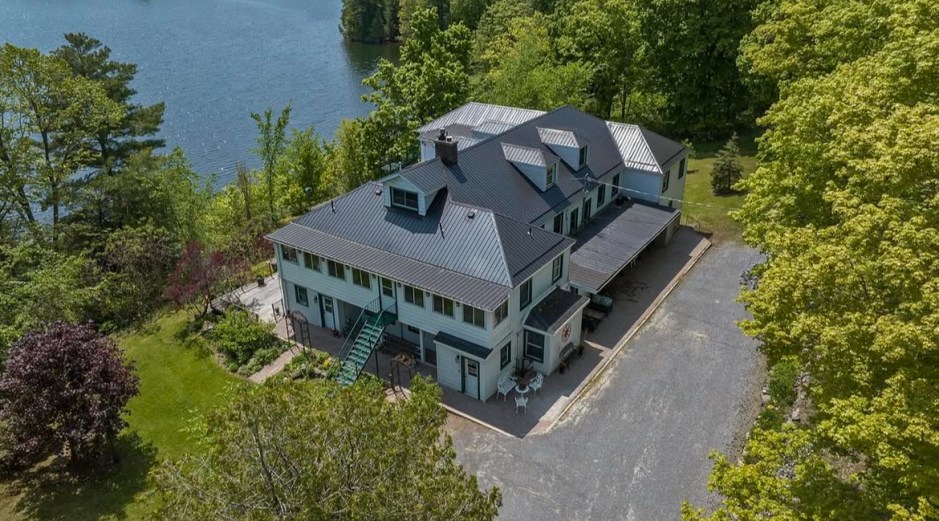
David Rosenberg gazes out over the frozen lake at Bonvie Recovery, the rehabilitation centre he cofounded, nestled about two and a half hours east of Toronto in Kingston, Ontario. It is March 2025. The ice sparkles like crystal in the morning sun; the air hangs crisp and still. Across from me in a consultation room with soft-silver decor, Rosenberg breathes in short, uneven bursts—the toll of a five-year cocaine addiction that cost him a lung and almost his life, twice. His back slides into the hollow of a wooden chair, short frost-white hair frames his lowered, chestnut eyes. He wears a grey hoodie, hands idle on his stomach, shredding a Starbucks cup sleeve.
Once a desperate man who stole from his father’s business to fund his cocaine dependence, Rosenberg, 57, now reshapes recovery. His philosophy rejects the traditional impersonal nature of rehabilitation; instead, he favours structure, accountability, and long-term support. Bonvie Recovery, opened in August 2024, aims to be that alternative. And the need is pressing—Ontario’s opioid crisis has escalated, with overdose deaths surging 200% since 2016, according to Social Planning Toronto. In 2023, 2,647 Ontarians died from opioid overdoses, yet the government closed nine supervised consumption sites at the end of March 2025. Bonvie offers another way—one built on community, trust, and empathy.
Rosenberg has struggled with severe anxiety and undiagnosed learning disabilities since childhood. After dropping out of business school around 20, he joined his father’s successful Toronto business, Heritage Fine Clothing. He did well but felt unfulfilled. By his early thirties, he had built a seemingly picture-perfect life: a big house in Willowdale, a wife, and three kids. But this image of a stable life was funded with money siphoned from his father’s company—a betrayal that shattered their relationship. The business went bankrupt in 2004, and Rosenberg was left staring into the void of an uncertain future, terrified for the well-being of his wife and children.
The pressure to maintain their comfortable lifestyle, coupled with estrangement from his father, lifelong anxiety, and a growing sense that he didn’t deserve any of it, tormented him. With nowhere to turn, Rosenberg sought his cure for emotional pain in crack cocaine: a release from the shame, fear, failure, and the crushing weight of holding it all together.
Within five years, Rosenberg went from a million-dollar home to a park bench, consumed by his addiction. “I ran out of everything: no money, no clothes, no family,” he says. “[I was] a complete destitute, a bottom.” At 37, he entered rehabilitation at Jewish Addiction Community Services (JACS), where he learned recovery isn’t about willpower or hope but ongoing management. After months of treatment, he reconciled with his father, reconnected with his children, and began working as a fundraiser for the organization. A year later, he became JACS’ director of operations. By 41, he had earned a master’s in addiction and codependency from McMaster University. At 44, he opened a private practice, which he ran for twelve years. Then, at 57, he launched Bonvie Recovery.
Bonvie (from the French bonne vie, meaning “good life”) challenges the clinical feel of traditional rehabilitation. “Our personalized program speaks directly to the individual,” says Lyz Dick, Bonvie’s clinical lead and intake counsellor. “It’s not about fitting them into a rigid box; it’s about them figuring out what they need to do to live a sober life.” Many public rehabilitations follow one-size-fits-all models—more lecture hall than healing space. Bonvie treats each resident as an individual with a unique history, offering tailored, responsive, and personal therapy.
Bonvie incorporates an optional 12-step program—spiritual, not religious—focused on accountability, self-reflection, and personal growth. It’s the same framework Rosenberg used to rebuild his life. But support doesn’t end at discharge. “We check in with them, offer continued support,” Dick says. “They’re not left to figure it out alone.” A 2023 study published in the ASCP Journal suggests structured programs focusing on self-management and recovery training, like Bonvie’s, result in 94% of participants maintaining abstinence, with significant improvements in mental, physical, and social well-being.
Rosenberg calls his counselling approach ‘tough love,’ relying on his field experience more than his formal education. He recalls the desperate call from a Russian mother whose son, Alex, had exhausted every treatment option for his cocaine addiction. When Alex stopped answering his phone, Rosenberg—known for his direct involvement—drove to his apartment, kicked in the door, and found him in the fetal position, blood leaking from his nose and mouth. Cocaine overdose. Rosenberg called 911 and met the mother at the hospital. When she arrived, panicked, he told her to go home—he needed to speak with Alex alone.
Standing over Alex—who was barely conscious after the overdose, tubes in his arms—Rosenberg didn’t offer comfort. Instead, he leaned in and said flatly, “I’m done. Go fuck yourself. You want to die? Then die. It’s your choice. I’m not wasting any more of my time.”
Then he walked out. Later, when the hospital called asking Rosenberg to pick Alex up—he was the clinician on file—Rosenberg refused. “Not my problem,” he told them.
Soon after, Alex called him, furious. Rosenberg cut him off: “Why should I give a shit about you when you don’t give a shit about me or my time?” He hung up.
When Alex called again, his voice had changed—softer, shaking.
“I don’t want to die,” he said through tears.
“Then do what you’re told,” Rosenberg said.
Alex entered transitional housing soon after. Today, he’s three years sober, working in California—and still in touch.
Stories like this shape Rosenberg’s philosophy. He opened Bonvie not for redemption, but accountability—no miracles, just daily discipline to face your past and improve. According to a 2020 study by the National Institute on Drug Abuse, a U.S. federal research agency, relapse rates for substance use disorders—ranging from forty to sixty percent—compare to those for chronic illnesses like high blood pressure and asthma. Relapse is not failure but a sign that treatment needs to be resumed or adjusted. Addiction, like these illnesses, requires ongoing management rather than a one-time cure.
Sunlight slices through the blinds in the consultation room, catching steam curling from his coffee. Outside, chickadees flit between branches, their song breaking the stillness. A gentle breeze rustles the budding maple leaves. Rosenberg leans back and exhales. “Give up,” he says to those fighting addiction. “You’re not winning.” From his view, recovery begins with surrender to the illness, to the chaos. And for families? His advice is blunt: “Don’t comfort someone taking poison.” Rosenberg only helps those willing, as healing cannot be forced.
That’s the difference between sympathy and service: one enables, the other saves. You can reach out a hand—but people must choose to take it.
 thescribbler.ca